

Read Our Blogs
Importance of Accurate User Manual Translation
15-May-2025In the present globalized economy, products can no longer be confined to the local markets. Hence, with international expansion follows the need to adequately communicate with customers from different regions. So an especially important form of communication would be via a user manual that instructs the user in the operation, installation, or maintenance of a product. When businesses go international, here's where user manual translation plays a vital role in ensuring safety and correct use of the product by a customer regardless of his or her language.
What Is User Manual Translation?
Translation of user manuals encompasses converting content found in one user document into another language while maintaining technical accuracy, readability, and instructional clarity. It is a specific kind of translation that requires linguistic skills and knowledge about the subject.
Manuals are often found in industries such as:
- Electronics
- Automotive
- Medical devices
- Industrial equipment
- Software and IT products
Each of these industries has unique jargon and operational instructions that must be communicated clearly in multiple languages.
Why Is User Manual Translation Important?
1. Worldwide Market Entry
When companies market their goods abroad, they must comply with local regulations, many requiring documentation to be provided in the local language. A user manual aids businesses in legally entering foreign markets.
2. Better User Experience
An appropriate manual translation enables users to know exactly what the product is supposed to do without confusion. It also helps prevent misuse that may result in product damage or injury.
3. Customer Safety
In fields such as medical or automotive, poorly translated manuals may end up in hazardous situations. Clear and satisfactorily translated manuals help maintain the safety of users and others around.
4. Brand Trust and Reputation
If customers get instructions in their language, they will probably trust the brand. Properly translated manuals show professionalism and concern for the customer.
5. Legal Compliance
Several countries have stringent requirements relating to product documentation. If user manuals are not provided in the local language, they could be fined, recalled from the market, or taken to court.
Key Elements of a User Manual That Require Translation
A user manual consists of multiple components, all of which must be translated carefully:
- Product overview
- Installation instructions
- Operating procedures
- Safety warnings
- Maintenance and troubleshooting tips
- Technical specifications
- Warranty and service details
- Glossary of terms
Each section plays a crucial role in helping the end-user interact with the product correctly.
The Process of User Manual Translation
- A translation of a user manual involves an entire scrum workflow to guarantee quality, consistency, and conformity; this is what a typical process looks like:
- 1. Initial Assessment
- Identify the target audience and their language requirements.
- Review the source manual for complexity and technicality.
- Check for any localization issues (such as may units of measurement, images, or symbols have to be adapted).
2. Terminology Management
- Build a glossary of peculiar industry terms and product terms.
- Use TM tools for consistent terminology.
3. Translation by Subject Matter Experts
- Employ professional translators with the relevant domain knowledge.
- Ensure that translators understand the product and product use cases.
4. Editing and Proofreading
- Careful review to correct potential grammar, terminology, and formatting errors.
- Ensure instructions are logically arranged, straightforward, and easy to follow.
5. Formatting and Desktop Publishing
- Equalize the layout and formatting of the translated manual with the original.
- Check proper alignment of charts, tables, and images with the translated text.
6. Quality Assurance
- Functional testing, mainly for interactive digital manuals.
- Manual checking from the end-user perspective.
7. Client Review and Feedback
- Share the draft with the client/product team for review.
- Incorporate feedback and finalize the documentation.
Common Challenges in User Manual Translation
1. Technical Jargon
User manuals are mostly filled with industry terminologies. Translators, therefore, must know the technical aspect of it to communicate it properly.
2. Lack of Context
Sometimes a translator receives content without background on how the product works. This then leads to misinterpretation.
3. Layout and Design Constraints
Resisting the temptation to alter the format of manuals during translation is hard, as some languages cause text length expand or contract.
4. Regulatory Differences
Regional legislation may differ on directions regarding labelling, safety instructions, and disclaimers.
5. Cultural Sensitivity
What might be an acceptable thing in a culture may not go down well with an entirely different set of people. Hence localization must be undertaken to make it culturally acceptable.
Best Practices for Effective User Manual Translation
1. Professional Translation Services
Attempt to avoid any form of machine translations, notably Google Translate, for technical purposes. Work with certified translators or agencies well and truly versed in technical translation.
2. Style Guide
Setting up a style guide ensures consistency in tone, format, and terminology across all the translated manuals.
3. Translation Memory Tools
Translation Memory tools work to make things cheaper and more consistent, especially when manuals are updated quite often.
4. Provide Reference Materials
With reference materials, images, video clips, specs of the product, or an original manual that the translator needs for a full understanding can be shared.
5. Look for Localization Setup
Aim at developing the manual in mind for localization. Allow text to expand and choose images that remain neutral in cultural sensibility.
6. Testing the Translation of the Manual
Conducting pilot testing with original language speakers from the intended group will help resolve ambiguities or confusing parts.
There are numerous entities that work for localization, which itself depends on human translation.
Localization, on the other hand, goes a step further by adapting the content to fit the cultural and regional preferences of the target audience.
For example:
- Converting imperial units to metric
- Replacing images to reflect local environments
- Adjusting the tone of language to suit cultural norms
For user manuals, localization ensures not just understanding but also relevance and usability.
Industries That Benefit Most from User Manual Translation
1. Consumer Electronics
Smartphone, laptop, and appliance manuals must be accessible by people all over the world.
2. Medical Devices
Multilingual manuals are required for compliance with regulatory standards such as MDR (EU) and FDA (US).
3. Automotive
Translation of car manuals is necessary so that users can understand how to handle safety instructions and maintenance procedures.
4. Industrial Equipment
Translated manuals are relied upon by a technician for installation and operation of machinery for safety reasons.
5. Software and IT Products
User guides, installation procedures, and troubleshooting manuals for software products should be available in various languages.
Digital vs. Print Manuals: Implications for Translation
Many companies now provide digital user manuals in PDF, app, or web formats. This shift brings both opportunities and complexities for translation:
Advantages of Digital Manuals:
- Easier updates
- Interactive content (videos, links, FAQs)
- Cost-effective distribution
Translation Considerations for Digital Manuals:
- Multilingual interface support
- Mobile responsiveness
- Search functionality across languages
Whether in print or digital format, accuracy remains paramount.
Tips for Writing Translatable User Manuals
Before translation, ensure that the original manual is written clearly. Here are some tips:
- Use simple and concise language.
- Avoid idioms or culture-specific references.
- Use consistent terminology throughout.
- Break down instructions into step-by-step points.
- Include clear visuals with labels.
A well-written source manual leads to a better-translated product.
Technology's Role in User Manual Translation
1. Computer-Assisted Translation (CAT) Tools
These CAT tools, like SDL Trados or MemoQ, aid translators in maintaining consistency and applying already translated material.
2. Translation by AI
AI tools are helpful for draft translation and post-editing. Still, a human eye needs to take a look at it, especially when technical content is concerned.
3. CMS (Content Management System)
Having translation workflows integrated into your CMS makes real-time collaboration possible and speeds up the publishing of manuals in a translated version.
Conclusion
User manual translation is nobody's business but an array of infringement, including safe usage of the product and confidence in product operation by users worldwide. For a small company seeking its way into the global realm or a huge company with fresh product lines, the more expensive types of manual translation will surely be rewarded with compliance, goodwill, and brand name loyalty.
With the correct strategy, tools, and partners in place, you can soften the rough edges in the translation process and allow your manuals to speak every customer's language, both literary and metaphorical.
Arabic to English Translation Services: Bridging the Language Gap for
10-Apr-2025It serves no purpose in forging links, understanding, or conducting business. Among the numerous pairs of translation in demand, Arabic to English translation services are preeminent, owing to their bearings on international trade, diplomacy, tourism, education, and digital communication. Arabic is spoken by more than 400 million people worldwide; it is one of the six UN official languages and its presence forms an important part of Middle Eastern and North African (MENA) countries. In contrast, English is the language of the world.
Why Arabic to English Translation Services Matter
1. Cultural and Linguistic Diversity
Arabic is a language that is most certainly complicated; it encompasses diverse dialects, offering many cultural nuances. Many aspects of it differ from English with regard to syntax, grammar, and even semantics. To do an accurate translation, besides linguistic elements, understanding the culture is of utmost importance so as to express the right message.
2. Business and Trade
Many businesses oriented toward the English-speaking world wish to enter the market in the Middle East or to partner with businesses in the Arab world. Contracts, proposals, marketing materials, and websites need to be translated accurately. Marketing and commercial success hinge on accurate translations and on avoiding misinterpretation that may result in commercial losses.
3. Legal and Diplomatic Relevance
Legal documents such as contracts, immigration papers, and treaties often need to be translated from one language to the other, be it Arabic or English. Quite literally, one tiny miss in legal translation usually invites huge consequences in litigation or loss of rights.
4. Academic and Research Exchange
Much more because of international education and common research, Arabic-speaking students as much as Hispanic students will have their academic papers, theses, and admission documents translated from and into English.
5. Tourism and Hospitality
UAE, Egypt, and Saudi Arabia receive millions upon millions of tourists every year; they would be English-speaking. Well-done localized English translation works on signage, brochures, menus, and guides can improve safety for tourists.
Types of Arabic to English Translation Services:-
It is based on context that such types would require different translation services. It so happens that most common categories are discussed in the subsequent paragraphs:
1. Document Translation
Common translation services involve the translation of different types of documents such as:
- business contracts
- birth and marriage certificates
- passports and ID documents
- legal notices
- transcripts
- manuals and brochures
2. Legal Translation
Legal translation is highly specialized, which requires knowledge of two legal systems: from an Arab-speaking country and an English-speaking one. Common legal translations involve:
- court papers
- affidavits
- terms and conditions
- licenses and permits
- patents and copyrights
3. Medical Translation
Medical translation plays/plays an important role concerning medicine companies, hospitals, and much more operating globally. Such services include:
- patient records
- information on trials
- manuals of medical equipment
- prescription of drugs
- Health and safety documentation
4. Technical Translation
Technical Translation is that type in which the documents are scientific or technical in nature. It is pertinent to mention here that accuracy can avoid errors in product design or safety instructions. Some examples are:
- engineering manuals
- information technology documentation
- software user guides
- descriptions of industrial processes
5. Website and App Localization
Translating a website or mobile application from Arabic into English or the other way around is not simply a word-for-word translation. It will actually look into cultural preferences, layout adjustments, and language-specific elements that might vary from one culture to another. Such is important for companies aspiring to widen their operations to global markets.
6. Multimedia Translation
Voiceover and subtitling or dubbing services for films and videos, training or advertisement content, is the most popular part of media production and e-learning.
7. Certified Translation
The certified translation is much demanded for all kinds of official purposes such as immigration, admissions to educational institutions abroad, and other legal matters. Such documents require translation by a certified translator or a registered translation agency.
8. Literary Translation
An understanding of metaphors, rhythm, and cultural nuances in the distinction between the literary and the ordinary languages is essential while translating poetry, novels, and other forms of literature. Literary translation is a form of art, requiring a translator.
who could maintain the same tone and meaning as in the source language.
1. Oil and Gas
The oil-rich Arab countries generally work in partnership with multinational corporations. Usually, this involves technical documents, contracts, training materials, and safety protocols that all require seamless translation.
2. Education and Research
A growing number of students from the Arab world are studying abroad, while universities from the West also enter into partnerships with those from the Middle East. All of this means that there is a great demand for translating research papers, textbooks, and application documents.
3. E-Commerce
To get an Arabic-speaking market, websites and product descriptions, as well as payment instructions, must be localized by e-commerce sites.
4. Government and NGOs
As in communicating and reporting regarding humanitarian aid, refugee support, and development programs in the Arab region, NGOs, as well as the different government agencies, need assistance in professionally translating their contents.
When it comes to TV networks, film studios, and streaming services, the importance of translation and subtitling enters the picture to allow audiences to interact with the English and Arabic markets.
Difficulties regarding Arabic/English translation arise.
Nevertheless, despite a growing presence of machine translation and Artificial Intelligence, there still exist certain documents where human translators tend to shine above others-for example, complex or technical documents. And here is another set of challenges:
1. Dialects and Variants
Arabic has a multitude of dialects-Egyptian, Levantine, Gulf, Maghrebi, etc. These dialects differ widely in vocabulary and grammar, which only further complicates and nuances the task of translation.
2. Script and Structure
Arabic is written from right to left, while English is written from left to right. The two languages pose strain on the layout- mainly when it comes to digital environments or bilingual documents.
3. Cultural Sensitivity
Certain idioms or culturally referring objects in Arabic may not directly correspond to the English language. The translators should adapt the message but may not lose its essence.
4. Contextual Meaning
Arabic words have multidimensional meanings, given context. Thus, a literal translation may either yield an inaccurate or an unacceptable suggestion.
Choosing the Right Arabic to English Translation Service
All translation services cannot be the same. Here is a guide on how to pick the right one:
1. Certification Approved by the Translators
It is important to ensure that the translator or agency is approved or accredited by a recognized body because of the sensitive nature of legal or official documents.
2. Native Speakers in Both Languages
Services should have native speakers of Arabic and English as well so as to offer natural, fluent translation.
3. Industry Specialization
A medical document should be translated by someone knowledgeable about relevant medical terminology. Always ask for industry-specific expertise.
4. Turnaround Time
Fast services for urgent quick jobs without compromising quality. Good companies have delivery options that offer flexibility.
5. Confidentiality
Send the message across that the agency observes strict confidentiality and data protection protocols for legal documents, financial records, or any other personal information.
6. Assurance of Quality
Multiple levels of proofreading, editing, and quality check are usually conducted for a good translation service in order to achieve accuracy.
7. Customer Reviews
Read the testimonials or case studies related to clients in order to assess their satisfaction and reliability.
Target Audience Versus Machine Translation: What One Is Better?
Machine Translation
Google Translate, DeepL, and all those tool complements should come with instant solutions, but they are improving by the hour. They seldom observe the context concerned and often fail at intricate grammar or cultural nuances.
Human Translation
While human translation is slow and costly, it guarantees cultural appropriateness, emotional tone, and contextual accuracy.
In Such A Situation: For anything serious or formal, it is always important to have human translation. Machine translation is suitable for anything requiring a rough understanding or just for internal communication.
The Future For Arabic To English Translation Services
With globalization booming, the Arabic-English translations will see an upsurge in demand. The developments will include:
- AI Assisted Translation: This equates machine speed to human expertise for quicker results.
- Voice to Text Translation: Good when applied in real-time during business meetings or customer support.
- Multilingual Chatbots: For better customer-user experience across varying languages.
- Remote Interpretation Services: Of vital use, especially in legal or healthcare settings.
Final Thoughts
Arabic to English translation services constitute the lifeline for both cultures and industries. Either for a person who wants to translate documents for immigration purposes or a multinational company that wants to introduce its products into new markets, having a credible and specialized translation partner remains paramount.

Top 10 Online Translation Tools Recommended by Translators
29-Oct-2024It's now more important than ever to break down language boundaries in today's connected world. Although human translators are still indispensable for their sophisticated knowledge and cultural adaption skills, online translation tools have developed into essential tools for regular users as well as for professionals. Combining artificial intelligence, machine learning, and extensive language databases, these machine translations produce progressively accurate translations across many languages.
Today's online translation tools do more than just match words for words. They also offer translations that consider context, terminology management, and even style adaption. These tools can greatly improve your translating process whether your company wants to grow internationally or you are a professional translator trying to simplify your work.
Top 10 Online Translations Tools
Let's review the top 10 online translation tools that experienced translators regularly suggest:
1. Google Translate
Google Translate is the world's most used translation service, and with good reasons. Its neural machine translating system provides handwriting input, real-time camera translation, and conversational mode among over 100 languages. It shines in offering speedy translations for basic communication and understanding generic content, even if it does not always catch complex nuances. A lot of the time, expert translators use it as a starting point for bigger projects.
2. DeepL Translator
Professional translators have given DeepL great compliments for its very precise translations—especially across European languages. Its natural-sounding output and capacity to grasp context really stand out. High-quality translations are used for training the tool's neural networks, which produces more complex and contextually relevant outputs than many rivals. Its Pro edition provides terminology management and document translating among other things.
3. Microsoft Bing Translator
Using Microsoft's sophisticated machine translation, Bing Translator produces consistent translations across 75 languages. It provides special abilities including offline language packs and image translating. The machine translation is especially helpful for corporate customers that depend on the Microsoft ecosystem since it interfaces well with other Microsoft applications. For fast webpage translations especially, its website translator feature is quite useful.
4. Amazon Translate
Particularly used by companies and developers, Amazon Translate is a strong neural machine translating tool. It provides real-time translating features and shines in managing technical material. AWS makes it a great option for scalable corporate solutions since the service can be quickly included into programs and websites. Its customising choices let users keep same terminology across languages.
5. Systran Translate
Among the pioneers in machine translation, Systran's most recent neural technology shows amazing accuracy. Its specialised industrial dictionaries and capacity to manage technical translations really add value. Strict security needs would fit the platform since it provides both on-site and cloud-based solutions.
6. TranslatePress AI
TranslatePress AI is an expert at translating websites and works well with content management systems like WordPress. It enables effective multilingual website management by combining human editing features with machine translating ability. Direct editing translations straight on the webpage is made simple by the visual interface of the program, therefore guaranteeing ideal context alignment.
7. ChatGPT
Though mostly recognised as an artificial intelligence language model, ChatGPT has grown in popularity among translators for its capacity to offer context-aware translations and explanations. It can aid with cultural adaptation and excels in keeping tone and style across languages. For translators, its capacity to clarify translating choices and offer substitutes makes it a useful machine translation tool for learning.
8. Copy.ai
Translation skills of Copy.ai are centred on creative and marketing materials. It is notable for its capacity to keep marketing message and brand voice across languages. The online translation tools have features that are made just for people who make content, like the ability to change the tone of marketing materials and make them more relevant to different cultures.
7. Wordly.ai
Wordly.ai specialises in real-time speech translating and interpretation. For conferences, seminars, and activities involving several languages especially it is useful. For events and international business communication, the platform is a must since it provides simultaneous translating in several languages.
10. Sonix
Sonix is quite beneficial for multimedia content translation since it combines translation powers with audio transcription. It thrives at turning spoken content into written translations across several languages. Subtitling videos and creating content in several languages are two areas where this platform really thrives due to its automatic timestamp synchronisation and voice identification capabilities.
These online translation tools are great, but they still can't replace human knowledge and experience. Professional translators frequently combine these methods with their linguistic knowledge to produce accurate, culturally appropriate translations that preserve the original meaning and tone.

How to Prepare Your App for Localization
24-Oct-2024Limiting your app to one language can result in loss of huge market possibilities. App Localization in Kuwait has found that English is the most popular language with approx. 52% of people using it in their websites and apps. Therefore, the rest of the population is using their local or native language to interact with other websites.
With China's app business bringing over $162 billion followed by India, the mobile app market in non-English speaking areas is exploding quickly.
According to research, 72% of consumers want to use applications in their mother tongue. Localized apps experience up to a 128% rise in downloads in target regions. Localized apps have also demonstrated a 200% increase in download rates.
Let’s go through this article to find out what is app localization and how you can prepare your app for localization to outbid your competitors in new markets.
What is App Localization?
App localization transcends basic translation. It's the thorough process of customizing your app to run perfectly in several linguistic and cultural settings. This covers text translations, layout changes, cultural reference adaptation, graphic modification, local rule and custom compliance assurance.
App Localization in Kuwait improves user experience and raises engagement across many areas by making your app seem as though it was first developed for each target market.
Preparing Your App for Localization
- Implement Internationalization (i18n)
Your application needs to be internationalized before starting localization. Using Unicode (UTF-8) encoding to support several character sets, implementing flexible layouts that can accommodate text expansion and different reading directions, and avoiding hard coded strings in your code, this basic step entails separating all text content from the source code into resource files. Effective localization depends on proper globalization, which also helps to make future upgrades and maintenance much more practical.
- Design for Global Users
The process of designing friendly global applications requires assessment of several factors. As some languages can be thirty to forty percent longer than English, translation services give more space to text for expansion. Select picture references and icons that are not browser sensitive; build layouts that can fit both LTR and RTL text directions. You also need to have proper font size in your interface design as well as adequate white space. This outlook surely ensures that your app can incorporate one or more different language requirements without drastic changes.
- Organize String Resources Effectively
Effective localization depends on good control of string resources. Organize all written materials into a central repository and substitute unambiguous, clear, descriptive string IDs for general names. Since word order differs between languages, avoid concatenating strings; add context comments for translators to guarantee appropriate translations. To guarantee correct localization of dynamic content, apply string formatting for variables including dates, numbers, and currencies.
- Talk About Cultural Considerations
At its core, localization is all about culturalization. These cover suitable date and time format, correct number formatting and appropriate currency symbols and formats. Adapt color associations to appropriate cultures and adjust images and layout for diverse cultures. In every target market, the actual and exciting user experience calls for an understanding of cultural peculiarities.
- Technical Support
Establish a robust technical foundation for localization. Prepare several languages and use pseudo localization techniques to ensure the readiness of your application in a multilingual environment. Website localization in UAE design apps to support several language versions, and plan periodic updates for all languages. Proper character encoding support is essential for handling different scripts and special characters.
- Contextual and Documentation
Comprehensive documentation is crucial to successful localization. Create a complete localization kit that contains style guides for each target language, brand-specific terminology, and contextual information for translators. Show translators screenshots or videos illustrating app use to guarantee they grasp the background and intent of every text element.
- Quality Assurance
Implement a robust quality assurance approach for localized versions. Website localization in UAE covers automated fundamental localization tests, native speaker language assessments, and a user feedback system spanning many geographical areas. Regular quality assessments and updates assist preserve consistency and accuracy across all language editions.
Partnering with a Localization Agency
While in-house localization could seem attractive, cooperating with a website translation in UAE often proves more efficient and cost-effective in the long run. A good translation service brings native-speaking professional translators, cultural insight for each target market, technical knowledge of app localization, solid quality assurance methods, and project management ability. They also offer scalability for many languages and constant updates and maintenance.
Look for translation services with experience in app translation, an established track record, and solid quality control systems. The top agencies work as partners, helping you not simply translate your software, but truly modify it for success in new areas.
Localization is an investment in your app's global success. By properly preparing your app for localization and collaborating with competent partners, you can assure a seamless transition into new countries and optimize your app's international potential.
Work with App Localization in Kuwait because the time and money invested will pay off in higher downloads, improved user involvement, and more robust market presence all around.
Navigating the Challenges That Come with Establishing a Social Media P
04-Mar-2024The power of social media is becoming beneficial for many companies willing to work with diverse audiences and prospective customers. However, despite the knowledge of the relevance of social media marketing, many organisations are always faced with challenges as to how to develop a stable presence on these platforms.
The best creative advertising agency in Dubai is revealing the challenges that you might face and how we can help you conquer them.
The Challenges
- Formulating a Plan of Action
The greatest challenge in setting up a social media presence is the design of a strategy specific to any company. Given that the audience is dispersed across more platforms and each of them serves a specific function, you need to have defined goals.
Competitor analysis insights might help in developing a course of action compatible with the brand’s identity. Furthermore, the instinct to put into play native analytics and utilise monitoring metrics spawns enough capability for justified judgement calls as well as adjustments.
- Conducting a Performance Analysis
Preparing an accurate measurement of social media efforts is indispensable if you want to get the best results. The Advertising agency in Kuwait painstakingly analyse and evaluate KPIs to make data-driven decisions that support strategic reasons.
If one were to supplement native analytics with a complete holistic analytical tool, it is possible that you could achieve in-depth insights. Advanced analytical tools allow simple implementation of customer relationship management, offering insights into user interactions across various stages of the buyer's journey.
- Expanding the Boundaries
In an era when a large number of companies are fighting to capture the attention of audiences, businesses will find this a challenging task.
You may decide to purchase followers, but the creative advertising agency in Dubai steer clear of such shortcuts and focus on developing actual interplay through generating incredible content material. It is critical that, in the process of building a loyal audience and organic brand promotion, shared content and value-driven posts resonate with the targeted audience.
- Increasing the Participation Of The Audience
Despite having a huge fan base, it is still hard for many businesses to get the audience involved genuinely regularly. For marketers to bypass this challenge, tailor-made content according to their customary needs should be addressed. The use of interactive lead generators like polls and questions creates a dialogue that helps develop real relationships, which leads to more audience engagement and loyalty as well as improved brand image.
- Employing a Number of Different Platforms
It is vitally important to adopt a cross-channel approach so that most of the visibility offered by a brand can be exploited and accessed via all outlets. Since every platform has a different user set with different interests and requirements, the content strategy needs to be tailored for every target platform for better engagement.
With this cross-platform strength, brands can become much more powerful and touch so many more of the digital landscape’s surfaces.
How an Advertising Agency in Kuwait Can Help You
An advertising agency in Kuwait acts as a strategic partner during the design of your advertising and marketing strategy. The agency has in-depth knowledge of consumer behaviour and market dynamics. It possesses priceless insight to carry out strategic marketing activities that target specific markets. With careful audience segmentation and competitor analysis, we can find spaces of differentiation where the competitive space is plagued with digital noise by creating content that breaks through the clutter.
Additionally, the creative advertising agency in Dubai capitalise on your brand’s storytelling and visual communication to keep the audience’s attention engaged. Through pioneering approaches and new trends, the agency guarantees that brands will become constantly appealing.
The creative agency also holds a lot of experience in tracking and analysing performance for campaigns, such as data-driven optimisation, which eventually allows for improved campaign delivery over time.
Gaining access to industry standards and high-performing analytical tools allows brands to discover relevant insights that will enable them to create momentum for successful social media patterns.
A successful advertising agency is a reliable ally that helps you solve the challenges that are present in social media marketing and guides brands to success by using clever planning, impressive implementation, and measurable performance.
Final Takeaway
To effectively handle the nature of complex social media marketing, a coordinated and deliberate effort should be put in place. A creative advertising agency in Dubai utilises social media marketing to its full potential by dealing with those drawbacks frontally and using content that is bound to create value. This enables organisations to create effective brand value and build sustainable bonds with their customers.
How to Choose the Right Brochure Design for Your Dubai Business
09-Feb-2024At some time in life, one would always have come across a brochure, at least partially. It is among the modes that most companies adopt to undertake marketing or promotion. The aim of brochure designing in Dubai is to produce an excellent product that enhances sales, builds brand recognition, and highlights various products or services.
The simplest dictionary meaning of a brochure is an unfolded piece that becomes folded or creased to get the right size and shape. While “booklet” is often used with the term” brochure,” but they are in fact, two different types of printed materials.
A booklet is like a pocket book, where many sheets of paper are taken and stapled or sewed in the middle section. The selection of the most appropriate brochure may actually depend on what sort of material you would like to present.
After having understood these differences, read further to know the various types of brochures provided by Brochure designing in Abu Dhabi and how you can select the right type of brochure design for your business. Let's take a look at these particular varieties, along with the benefits and drawbacks associated with them:
There are various types of brochures, but there are some basic designs that can meet most needs.
1.Folding Options Available in Various Sizes:
- Half Fold or Bi-Fold: This is the simplest that consists of only one-fold, and it can be used for open layouts since it won’t interrupt the information on the material.
- Accordion Fold: This brochure has a zig-zag design that involves four or more panels. It is presented in an appealing way, but it might not keep its compactness when handling a larger paper thickness.
- Roll Fold: The brochure can be sealed with a ribbon or waxed, and as it is rolled up, it gives the impression of royal quality.
2.Options for Letter Sized Folding:
- Tri (Letter) Fold: The brochure is divided into three equal parts. It can be used to unveil the information in different steps.
- Z Fold: This brochure has three panels that are Z folded and its aim is to draw the reader’s attention towards commencing reading other parts of the pamphlet.
- Gate Fold: A gate fold is a tri-fold, but wider and more visually interesting than most three panel prints. It is constructed of two sides that oppose and fold to meet at the centre.
3.Choices for Complex Folding:
The conceptualization and composition of these folds can be challenging, but they are applicable in some specific cases.
- Double Parallel Fold: This method includes dividing the paper into two big panels and two little ones, which creates a deep half fold that is better suited to large drawings.
- French fold: A page is folded in half and then again perpendicular to this initial fold. This makes for an extensive room that can serve as a basis for promotional mail.
- Double Gate Fold: The two side panels are folded towards the main panel in a gate shape, which ensures an ideal showcase of the presentation.
When choosing the fold for your brochure mailer, it may be a good idea to consider what is known as ‘your brand fold.’ Styles such as double parallel fold, French folds, and Accordion can leave a lasting impression on receivers who may not be used to receiving correspondence from your company. You can ask Brochure Designing in Dubai to advise you on which brochure might suit your business in Dubai.
How to Decide What Kind of Brochure to Get?
In terms of marketing, brochures are a great marketing tools, and the chosen design for them often matches the company’s nature as well as its goals in marketing.
For businesses that wish to make a grand statement or serve specific aims, such as luxury labels and event companies, it may seem that folds that are uniquely rationed—for instance, accordion folds or rollouts—could be more appropriate. These designs allow people to create presentations that are at the same time creative, draw attention, and carry an aura of exclusivity.
On the other side, organisations that prioritize practicality and ease of distribution—like retail shops or service providers—often go for letter-sized fold options such as tri-fold or Z -wrap. This is due to the fact that these designs make it easy for them to portray product-related information or offers in an organised format, and therefore they are a good fit for service industries.
The French or double parallel folds are mainly implemented by companies that deal with unique sections of the market and have special demands. An example of this is that businesses in the tourism industry can use the French fold to display destination guides or packages using the enormous space provided for photo descriptions coupled with detailed itineraries.
The selection of a brochure essentially represents the brand identity, target audience, and marketing objectives. Brochure designing in Abu Dhabi aims for elegance, practicality, or versatility to ensure that the brochure reaches the target audience alongside the message the business is trying to portray.

What You Need to Know About Localization Rates
02-Jan-2024Hey! Great that your mobile app was approved in Dubai. It seems that you want globalize your innovation. The Localization Services in Dubai can easily take this issue out of your hands.
Think about this: You are moving into the international field, and the main thing is that you need to get used to local languages.
As now a citizen of the globe, an update to your application's language is required. Cultural fluency, resonance and a touch of the local feel is now required to resonate with your target audience.
A translation also involves more than just the act of translating. Not only is localization not necessarily expensive, but the rewards it offers on an international playing field are like opening a treasure chest.
You must be full of enthusiasm, but finding one's way through the maze of localization raises questions such as, how much investment should be made? What about return?
Let our Localization company in UAE be your guiding star in this localization ocean. Let's crack these numbers and see about the art of finding that just-right localization services to conduct your linguistic symphony.
Ways to Choose the Right Localization Services At Your Budget
When it comes to choosing the most suitable localization service for your hard-earned cash, there are a multitude of factors that must be considered. The costs linked to localization can differ greatly depending on the unique requirements and objectives of your business. Opting for enterprise-level translation services may prove to be pricier, but this allows you to tap into a pool of proficient translators who possess an in-depth understanding of not only your desired language but also the specific market you wish to target.
You can expect a fee of approx. USD 0.05 per word. Smaller translation firms will charge lesser fees . There are additional language service providers (LSPs) that specialize in different sectors, such as gaming, legal, healthcare, and food. The price of these LSPs fluctuates depending on the specific project and language combination.
The rate per word for localization typically encompasses a range of services, such as proofreading, translation, and revision by another linguist. However, it's important to note that the software localization or gaming localization rates might vary.
Localization Rates and The Most Important Factors
Understanding the key factors that affect cost is an essential prerequisite to staying afloat in localization service waters. A breakdown is as follows:
1. Difficulties in The Target Language
More difficult languages and higher target area costs cause some Localization Services in Dubai to come with a hefty price. There is a premium need for Norwegian, Swedish, Icelandic, Finnish, Japanese, and Korean.
2. A Challenging Language Pair
One factor which influences price is the ease with which translators to particular language pairs can be found. For example, it is usually easier and cheaper to find someone who can translate from English-Portuguese than between Turkish and Icelandic.
3. Volume of Work
The most important factors include translation efficiency and the chance of discounts for bulk deals.
4. Timeline of the Project
Moreover, some Localization company in UAE may even provide a fast turnaround; but rush fees nearly always accompany the provision of accelerated services.
5. Word Count and Repetition
The number of words and the number of repetitions affect prices.
6. Visual Elements of the Content
Examples of materials which add to costs of the project, include graphic text, illustrations, photographs and films. These pieces are also translated, reproduced and captioned.
7. The Characteristics of the Project
Specialists may be required for certain projects, such as localizing video games. Prices will vary in these cases. If the project calls for it, seek out translators with specialized knowledge.
8. Tools for Project Management and Localization
While QA reviews, workflow automation technologies, localization tools and project management all affect costs in different ways. Some of the tools and technologies will need upfront investments.
How to Manage Localization Budget?
You should consider the following things when you are making a budget for localization services:
- Content Specialisation and Uniqueness: For such distinctive and specialised content, one must look for a Localization company in UAE with qualified translators who have received the necessary training in this area.
- Keping the Voice of the Brand Consistent: If you want a similar emotional or message appeal from your brand, you must hire translators with training in marketing content. These native and subject matter specialists will carefully understand your brand.
- Multilingual Workers and Quality Control: It is important to hire native subject matter specialist in your team who can look after the quality of the content. However, if you can’t have someone on the team, then it is important that you hire someone, who can assist you in reviewing the content. This stage ensures the accuracy and smoothness of the translation text while assisting in quality assurance.
- Content for New Markets: It is important that you disburse information to new customers in their language when breaking into new markets. You need website blogs, marketing materials, articles, vlogs, press release etc. Allocate a budget for localization services in Dubai when you localise your content.
- Maximizing Your Localization Investment: If you are strapped for cash, the attractiveness of a cheaper solution to your localization problem is obvious. However, often sacrificing quality is a costly mistake.
- Put Quality First to Avoid Mistakes: Do not rush because it can be a fatal mistake to omit information that was poorly translated. Risks include going off track from your brand voice, running afoul of your target demographic and maybe even ending up in the rules-aggravating hot water.
- Using Strategy to Implement Budget Control: Take the long way around, rather than shortcuts. Phasing your localization project can give you greater control over the budget.
- Pay attention to Resources: Choosing the right localization services in Dubai will help you create top quality content. Look for dealers with good localization tools to save time and enhance quality. To speed up the process, ask about extra services such as project management and quality control.
At ICS Dubai, we offer first-class localization services in Dubai at a flexible price. We are the best language solutions provider that enco
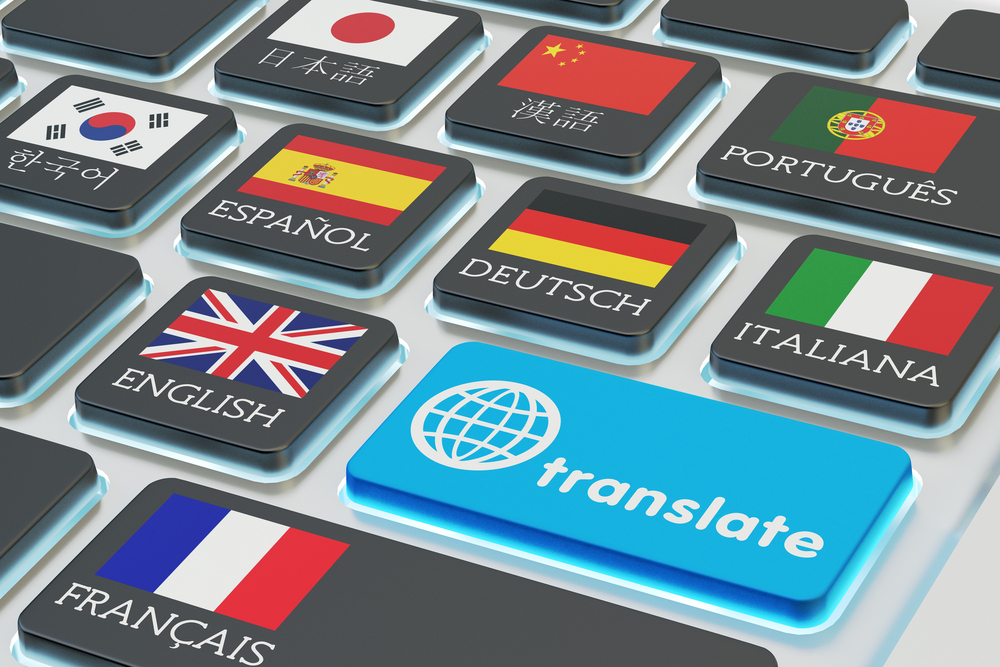
Effective Communication Across Languages: 5 Tips for Video Conferenci
18-Dec-2023The meeting of world at a singular point is a great achievement that has been made possible by outstanding abilities exhibited by online meeting platforms like Zoom, Teams, and Webex. Now you can talk with some one sitting in Dubai in their own language using the services of Arabic Translation in Dubai.
No time during history has ever been more appropriate for connecting with colleagues, friends, customers or business partners who live elsewhere than others.
Nevertheless, the irritating language impediment can still interrupt such virtual reunions and thereby spoil them. Taking the help of Arabic interpretation services in Kuwait can help you translate the language even at remote locations to beat the language barriers.
So, are you interested in knowing the skills in running multilingual meetings? Stress Not! To ensure that your Zoom or Teams meetings become an international language celebration, here are some handy tips. Be ready to break the all-language barriers and let your meetings run smooth as silk!
1.Finding the Best Translators for Your Zoom
This involves hiring professional from Arabic interpretation services in Kuwait who can speak all the languages to make an effective multilingual conference possible. It is easy to identify the best of the rest when you have a language service provider or a remote simultaneous interpretation expert on board so that you can personalize them for the event’s needs.
The accuracy of your translator language magic depends greatly on the clarity of the sound quality. However, it’s vital to guarantee every user wears an already tested headset. You should own a verified top-notch quality headset that help you convey your message clearly to your translator and clients.
2.Combine a Portfolio of Multilingual Meeting Resources
Although both Zoom and Teams generously provide interpretation audio channels, it is very important to ensure that your parties will have proper equipment for interpretation.
If you want to be a good researcher and develop your comprehension skills further, you should explore alternative options behind the usual language switchers of Zoom and Teams.
You can take the help of Arabic interpretation services in Kuwait to translate your audio or communication skills in any combination of languages. We have a set of skilled native translators who can deftly provide translation in any global languages proficiently to ensure that no message is lost in translation.
3.Provide Briefs and Plans to Your Translators
Ensure you offer your translators every material planned for the conference and valuable insight of both your company and industry. This preventive technique helps in enhancing the competence of translators thus makes a multi-language meeting effective.
The construction of a well-designed meeting agenda assists discussions moving into the correct approach and gives translators directions through which they can follow.
You should set up a channel of open and frank communication with your translators. To achieve a successful multilingual, get together, it is crucial to communicate effectively with your translators.
These include the provision of an effective interpreter coordinator as well as specialised platforms meant for remote interpretation all of which can reliably act as conduit for efficient and clear communication.
4. A Superior Camera to Convey Your Emotions in Language
To improve the experiences of translating, it is vital that the interpreters be provided with crystal clear images. This means that you must have a high-class camera that you will use so as to make sure that there is no room for confusion over the identity of the speakers.
Visibility of the speaker is therefore crucial to interpreters where they observe the facial expression, tone and mood of a participant in order for understanding of the meaning.
5. Ensure that Your Speech is in Sync with the Translation Process
Arabic translation in Dubai ensures that smooth interpretation entails a well-paced dialogue. Pauses intentionally left between the speakers allow the interpreters the chance to catch up with them, which comes in handy during a dialog where many languages are involved.
However, it is important to note that the translators need some time to say and pass through channels. This is important as it involves giving them time to do the job well.
Use very short breaks between various segments or speakers. This will put gloss into the meeting and allow all participants to reorder their positions for seamless transition from one section to another.
The careful construction of the agenda will be appreciated through nods of appreciation by both the participants and the interpreters.
This means that with these resources, you can have peace of mind knowing that your interpreters are just a short click away, able to solve any problem or offer support whenever necessary.
Conclusion
Now, with the knowledge and skills of Arabic interpretation services in Kuwait, current translation of the meetings can be done without skipping a beat. So, with the help of our proficient translators, you can participate even sitting in New York or Dubai as long as there is a stable internet connection.
Categories
FOLLOW US ON
Most Popular Blogs
- Importance of Accurate User Manual Translation
- Arabic to English Translation Services: Bridging the Language Gap for Global Communication
- Top 10 Online Translation Tools Recommended by Translators
- How to Prepare Your App for Localization
- Navigating the Challenges That Come with Establishing a Social Media Presence for Brands